
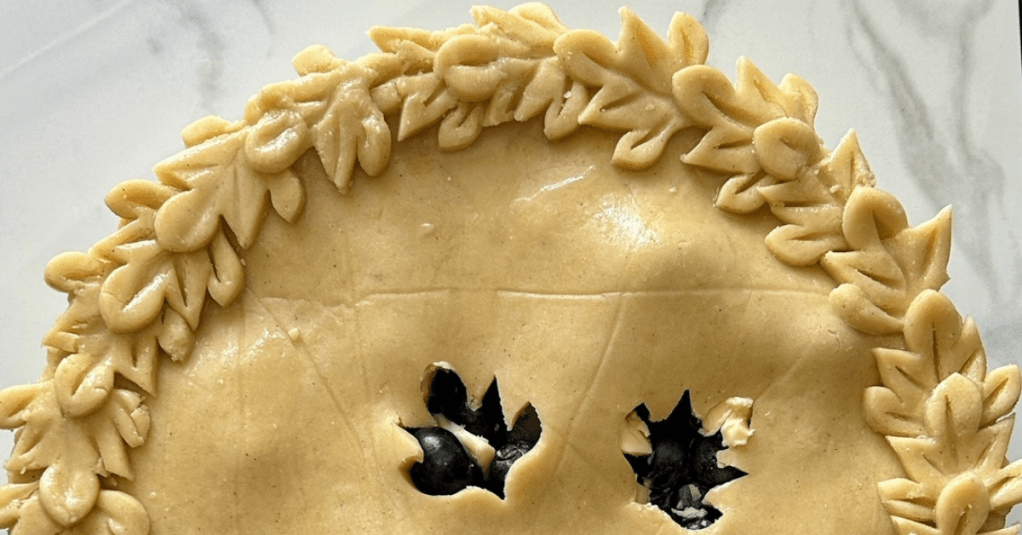
THE ORIGINAL ‘RECEIPT’
RICH SHORT CRUST.
Rub ½ lb. of butter and 2 oz. of sifted sugar into 1 lb. of dry sifted flour; beat two eggs to mix, and add as much water as will form a firm paste; this paste requires to be mixed with the hand; it is a good paste for fruit tarts, especially in hot weather, when puff paste is difficult to make well.
~Handbook of Domestic Cookery. London and Glasgow: William Collins, Sons, & Company, Limited, 1882.

THE UPDATED RECIPE
- 1 lb. sifted all-purpose flour
- 2 oz. granulated sugar
- 8 oz. butter
- 2 eggs
- 1 to 2 Tb. cold water.
Sift the flour into a mixing bowl.
Using the fingers, mix the flour and sugar until thoroughly blended.
Cut the butter into chunks, and then, with the fingers, work it into the dry ingredients until an even, crumbly texture is achieved.
Beat the eggs lightly with a whisk, and then add them to the crumbly mixture; use a fork and then the hands to blend in thoroughly, but gently.
Add portions of the cold water, and work into the paste; add only enough so that the consistency is sufficiently moist to enable the paste, when pressed, to clump together into a ball.
On a lightly floured surface, using a lightly floured rolling-pin, roll the pastry to approximately 3/16 to 1/4 of an inch in thickness.
This quantity of pastry is sufficient for one 9-inch diameter double crust pie, and approximately 10 small tart shells.
Bake according to the requirements for the filling used, or “blind’ in a preheated oven at 350F until golden.
For a fruit-filled pie, line a pie plate with pastry, then fill with fruit, sugar, and any other required ingredients; top with an upper crust, pierced to allow steam to escape, or with woven lattice.
Seal the edges by moistening between the upper and lower crust with water, and press firmly together.
Trim off the excess pastry with a knife, and crimp the edge in a decorative design, using the fingers, or a pastry jagging iron, or even a skeleton key.
Bake approximately 1 hour in a preheated oven, first at 450F for about 6 to 8 minutes (until the pastry is just faintly golden) and then reduce the temperature to 350F to complete the baking.
Empty, individual pie or tart shells can be baked “blind” at 350F, and will require a shorter baking time; the smaller the shell, the more quickly it will bake.
This pastry is easy to work with, and has a delicate flavour, resembling shortbread. It is less fragile and flaky than some recipes, and works particularly well for fresh fruit pies, because it does not tend to soak and become soggy from the juices as readily.
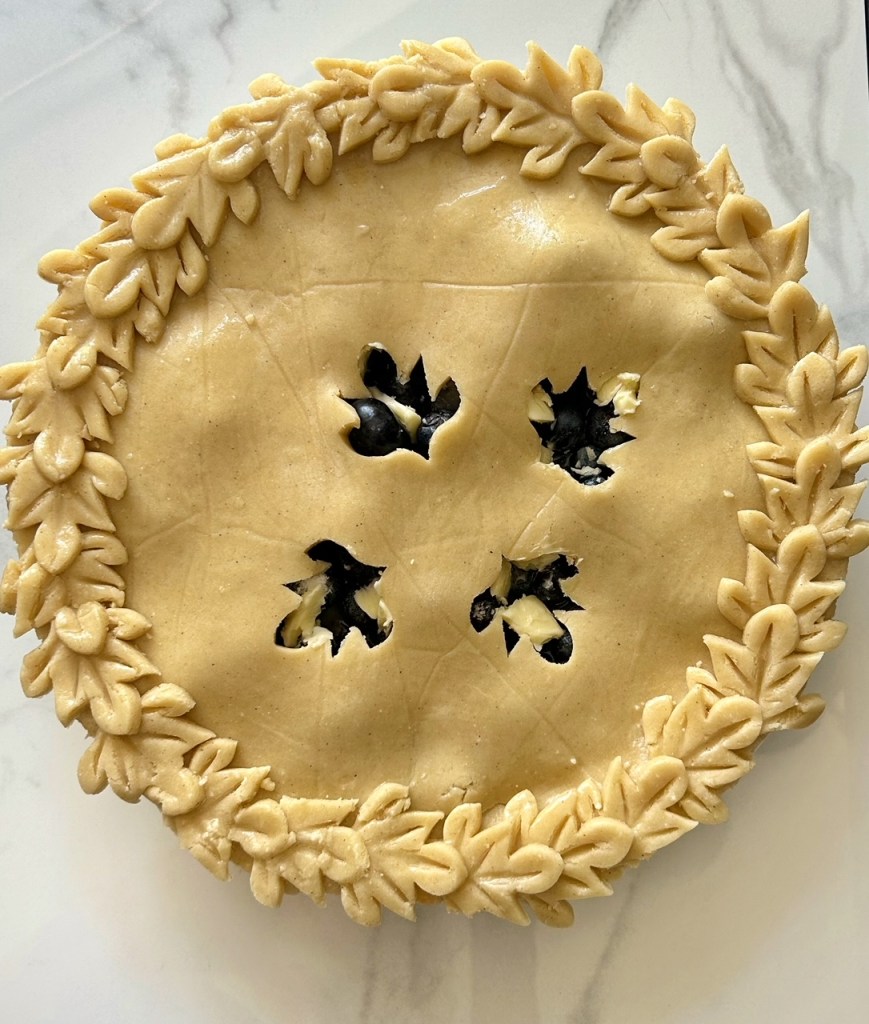
A note from Patricia: I used this pie crust recipe for “Whortleberry Pie” with great success. I substituted 1:1 gluten-free flour and it turned out beautifully! Just a little extra cold water was needed than what was noted in the recipe above.
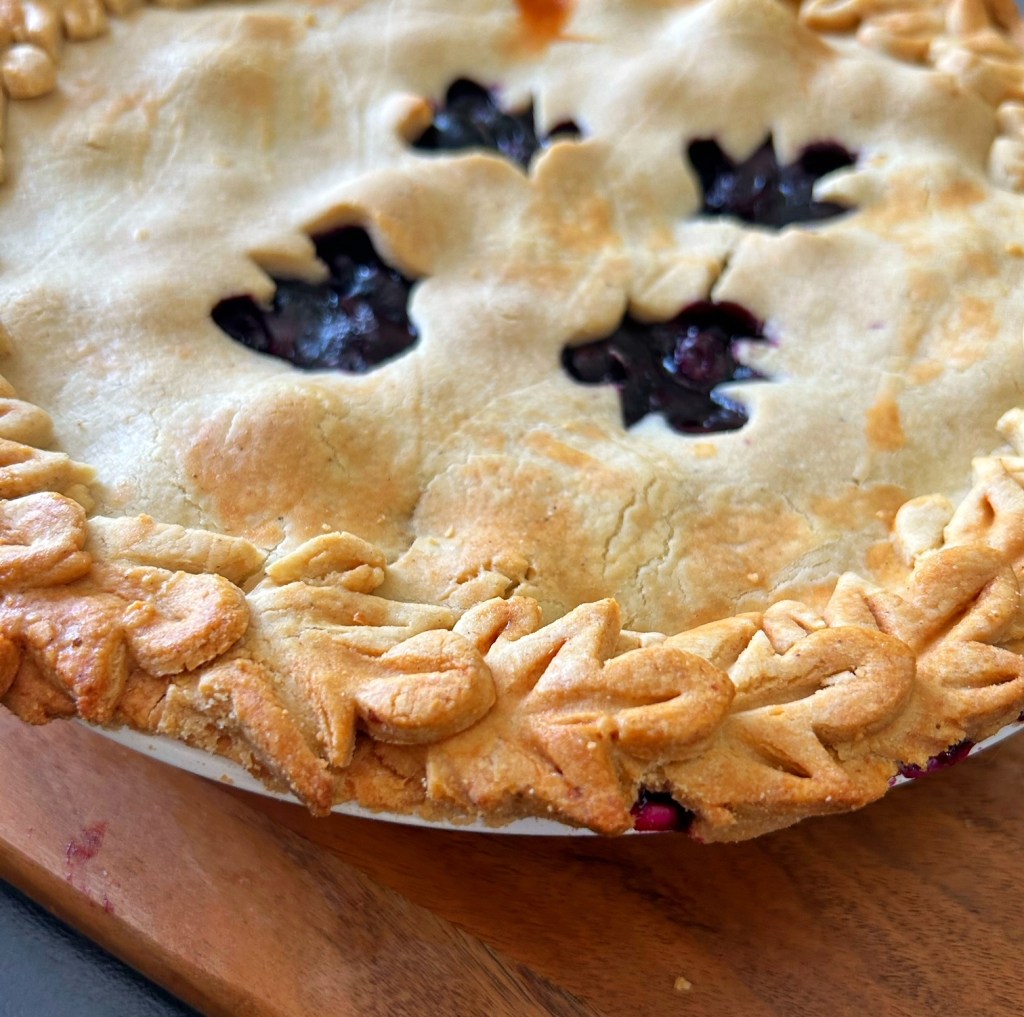
My first crust was not a success. The same applies to several succeeding ones. But it was not my fault. The recipe did not say the water must be cold, and so, naturally, I used hot. It was tough enough (I mean the pie) to sew buttons on. Then followed a series with boggy foundations. The family called them “muskegs.”
~Ferguson, Emily. Janey Canuck in the West. London, New York, Toronto and Melbourne: Cassell and Company, Limited, 1910.
 the prog basket