
THE ORIGINAL ‘RECEIPT’
SALMON LOAF
One can salmon, one cup rolled crackers, two eggs, two tablespoons butter, pepper, salt and sage to taste. Put in granite dish and steam one hour. Slice like ham when cold.
~The Ladies’ Aid Society of Broadway Tabernacle, Toronto. Recipes. Toronto: P. R. Wilson Ptg., Co., 1912.

THE UPDATED RECIPE
- 2 eggs
- 2 7 ½ – oz. tins of canned red salmon
- 1 c. finely rolled soda cracker crumbs
- 2 Tb. soft butter
- ¼ tsp. black pepper
- dash of salt
- 1 ½ tsp. dried rubbed sage. (or 3/4 tsp. ground sage)
Grease a 3-cup size oven-proof pudding bowl with butter. If you don’t have a proper “pudding bowl”, a pyrex glass bowl (heat safe) would work well.
On a sheet of waxed-paper, using a rolling-pin, roll sufficient crackers until they form fine crumbs, to fill a one-cup measure. You could also blitz the crackers in a food processor as a quicker alternative.
Set a rack, or a steamer basket, in a large lidded saucepan, and put a small amount of water in the bottom, (to steam the loaf); set over medium-low heat, and simmer so that it will already be hot when you put the loaf into it.
In a small bowl, beat the eggs lightly with a fork, to blend the whites and yolks.
In a mixing bowl, put the contents of the two cans of salmon; remove the skin, and any large bones, but retain the liquid.
Mash the salmon and the liquid from the cans of salmon with a fork , and add the eggs, crumbs, butter and seasonings.
Mix thoroughly by beating lightly with a fork, until the mixture is evenly blended and smooth.
Put the mixture into the buttered bowl, and pack it down solidly, to avoid any air bubbles.
Smooth the surface with a broad-bladed knife.
Cover with a piece of greaseproof paper and tin foil – be sure to create a pleat in the top – and then tie this topper on with a piece of string. Create a handle with string as well, so that it is easy to lift from the steaming basket when it is cooked. This video may help: Mason Cash – How to steam a pudding
Place the bowl on the rack over simmering water, and cover the pot with a lid.
Steam for one hour, over medium-low heat. Be sure to replenish the boiling water if required.
When cooked, carefully remove the dish from the saucepan, and allow the loaf to cool on a rack.
Then, carefully loosen the loaf from the bowl with a sharp knife.
Cover the top of the bowl with a serving plate, and then invert; carefully remove the bowl, and chill the loaf thoroughly before serving.
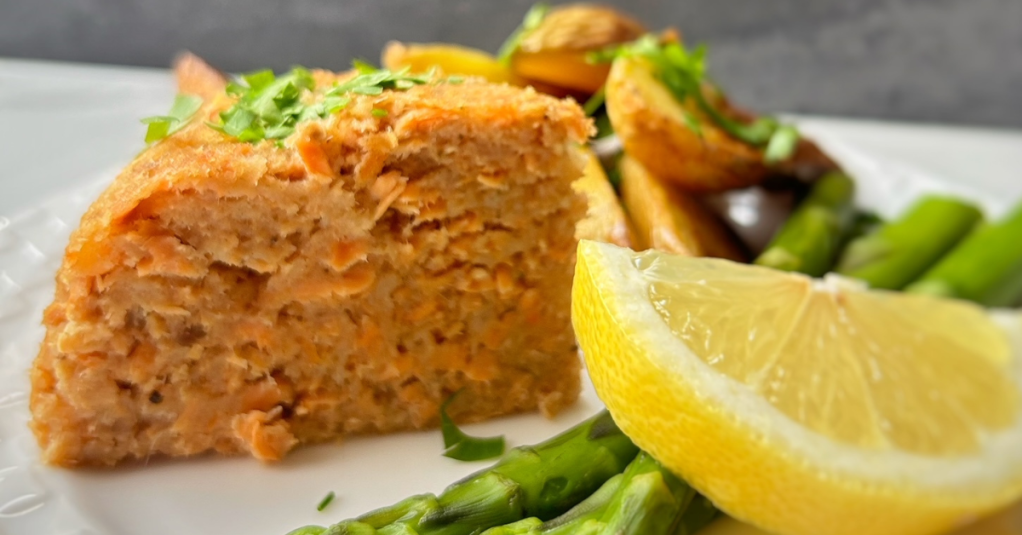
Garnish with parsley and lemon slices or wedges when serving the Salmon Loaf.
Cut the loaf into thin wedges when serving.
Yield: about 6 to 8 servings.
This loaf is ideal for a light luncheon; it is colourful and attractive, with a fine, even texture, and has a refreshing, piquant flavour.
Note: In the early twentieth century, canned salmon was available in 1-pound tins.
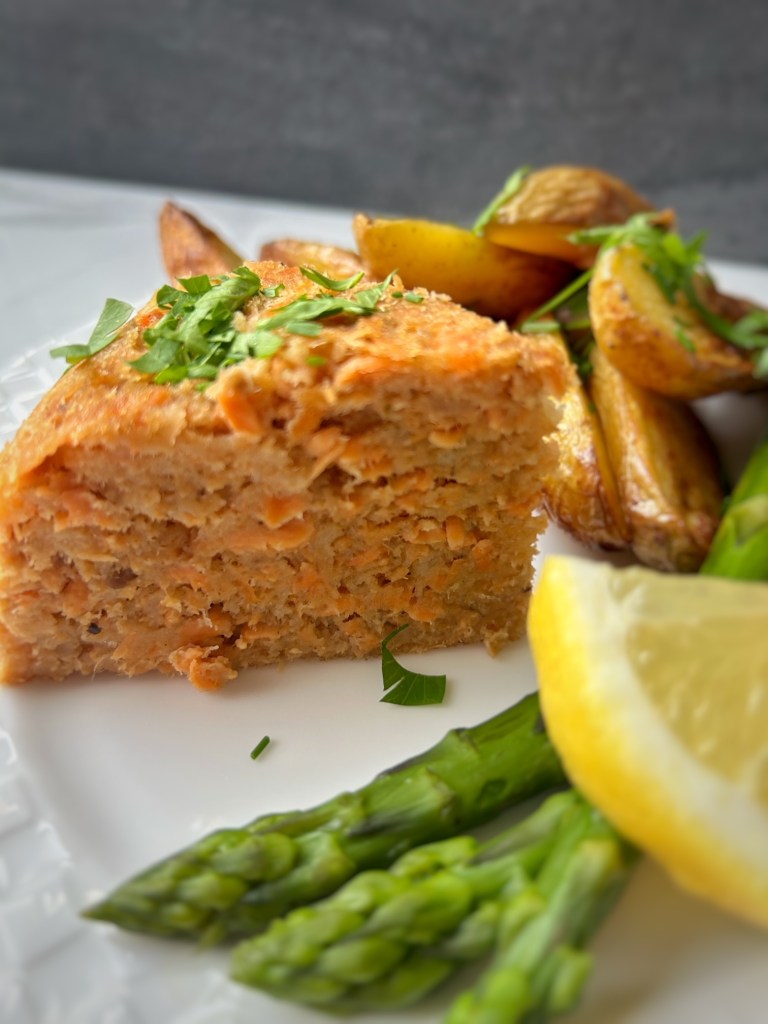
A note from Patricia: Yes, gluten-free crackers were substituted in my version, and it worked out fabulously. I thought it best to cook this dish with my mom, as I thought that she may have had experience with a salmon loaf and steaming. She remembered her own mother making a salmon loaf, but she didn’t have any experience with steaming, so we were definitely ‘winging it’. We kept a close eye on our stock pot that contained the steamer basket (she had the kind of steamer basket where the centre handle can be removed so the bowl could just sit in the steaming basket), and we did have to add a bit more water twice throughout the steaming process. When it was done, it was a bit tricky getting the ‘loaf’ from the bowl, so be sure to loosen it well with a knife prior to inverting it onto a plate. We were both pretty surprised by this recipe…. it tasted incredible and was moist and packed full of flavour. We ate this with some fingerling potatoes and fresh asparagus, and both agreed that we’d certainly be making it again. It’s nice to discover new ways to cook things (what else can I steam???), experimenting with a new way to prepare salmon, and always fun to cook with family.

 the prog basket