THE ORIGINAL ‘RECEIPT’
SPLENDID OAT CAKE.
……
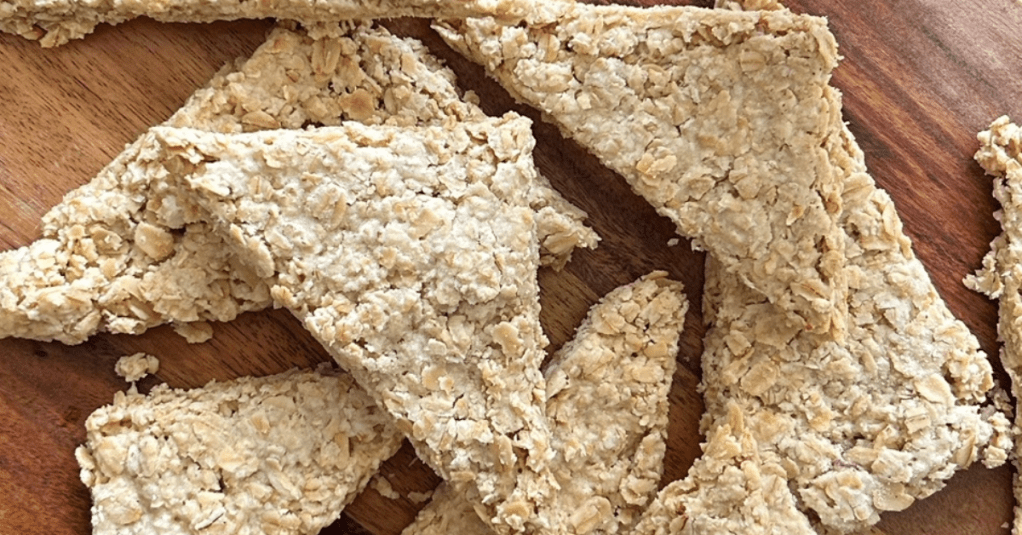
Take oatmeal, say three cups, and mix with one cup of flour, then mix in butter (well) not enough to prove sticky to the fingers, then pour in cold water and mix; take on to the board and sprinkle flour when necessary, when rolling. Be careful not to make it too wet, or it will prove troublesome to roll very thin; roll thin, cut it in squares or three-cornered pieces, and bake in a slow oven. Best when fresh made.
~Compiled by Members of the Ladies’ Association of Bank Street Church. The Canadian Economist, A Book of Tried and Tested Receipts. Ottawa: Alexr. Mortimer; Toronto: Hunter Rose & Co., 1881.
THE UPDATED RECIPE
- 1 c. sifted all-purpose flour
- 3 c. fine oatmeal (or use rolled oats but blitz them finer in a food processor)
- ½ tsp. salt
- ¾ c. butter
- 5 to 7 Tb. cold water.
Preheat oven to 300F.
Grease two large baking sheets with butter.
Sift the flour and measure it.
In a large mixing bowl, combine the flour, oatmeal and salt; blend together thoroughly.
Cut the butter into the dry ingredients with a knife, and then, using the fingers, work the butter in thoroughly, until the whole mixture has an even consistency of fine crumbs.
Add the water gradually, and stir lightly with a fork; use only sufficient water so that the dough will hold together.
Then, mould the dough into three balls, using the hands.
On a lightly floured surface, using a lightly floured rolling pin, roll the balls of dough to about 3/16-inch in thickness.
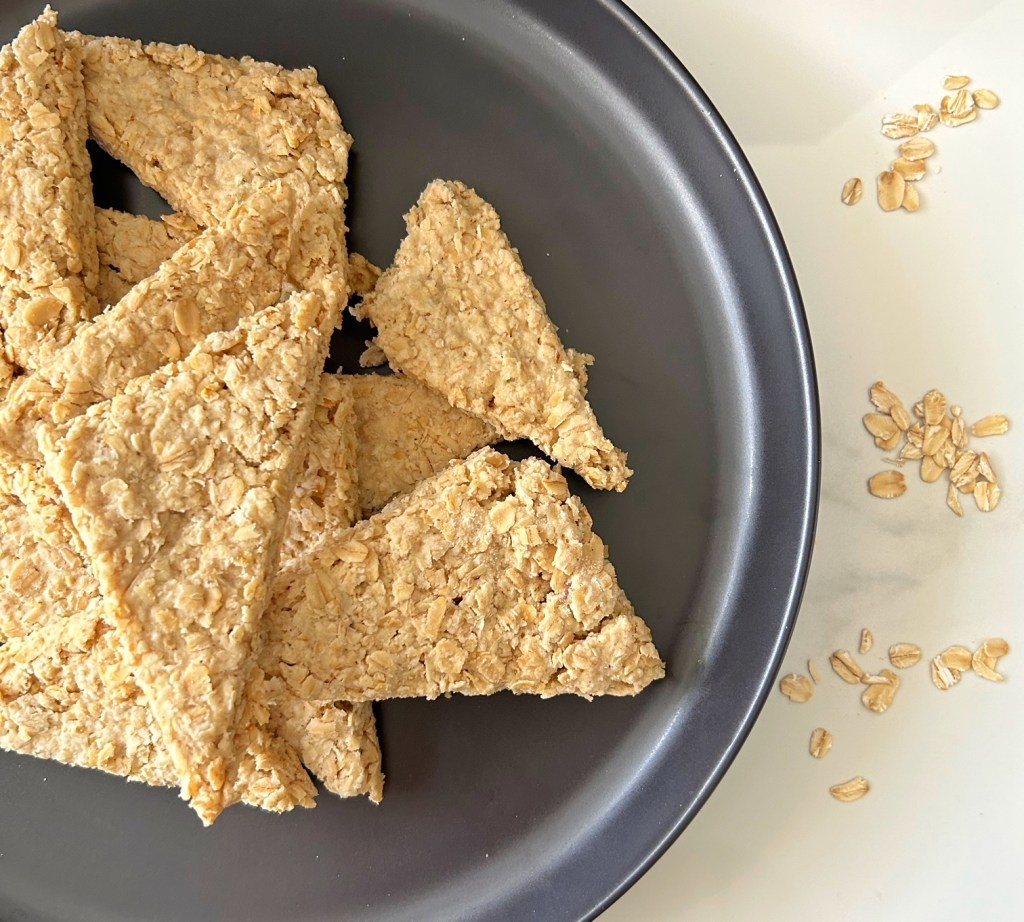
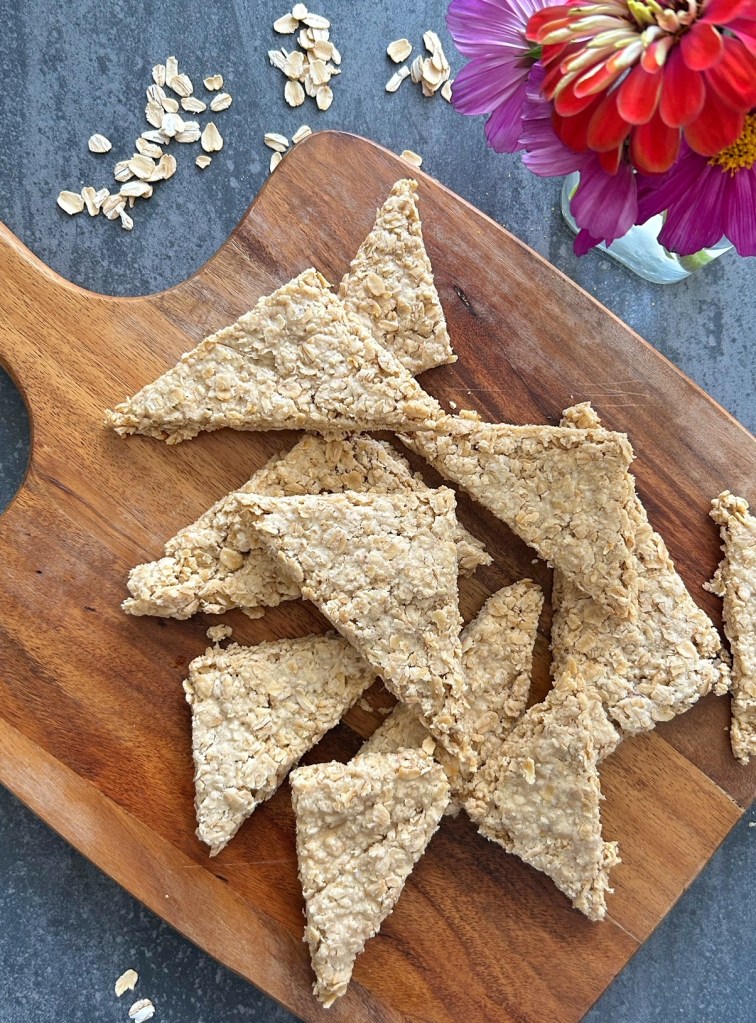
Cut the dough into squares or triangles with a sharp knife (four-inch squares, halved diagonally, work well).
Place the oat cakes on the buttered baking sheets.
Bake in a preheated oven, at 300F for approximately 45 to 50 minutes, until faintly browned.
Yield: approximately 2 dozen.
Serve these oat cakes warm or cold; they are good with butter, jam, honey or cheese.
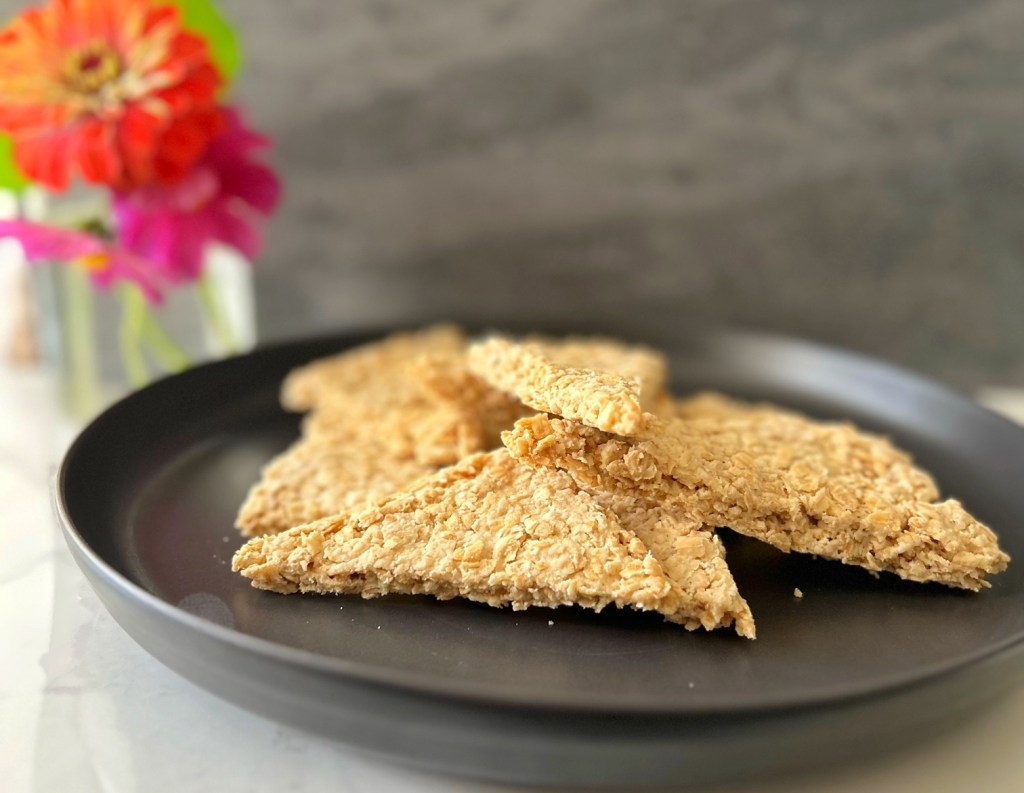
A note from Patricia: I wasn’t familiar with what an oat cake was, and had to do a little bit of research regarding their origin, etc. so that I could get my head around this recipe. Oat cakes have Scottish origins, and they made their way to the Maritimes of Canada as many of the early settlers in Nova Scotia had travelled from Scotland. Oat cakes are a snack, often served at tea-time, and sometimes they are sweet like a cookie, and in some recipes they are more salty like a cracker. Sometimes, they’re salty AND sweet. Traditional Scottish oat cakes are often round in shape, while in Nova Scotia, they are often cut in squares or rectangles. For this recipe, there is no sugar, and so these are more like a savoury cracker (and definitely buttery!).
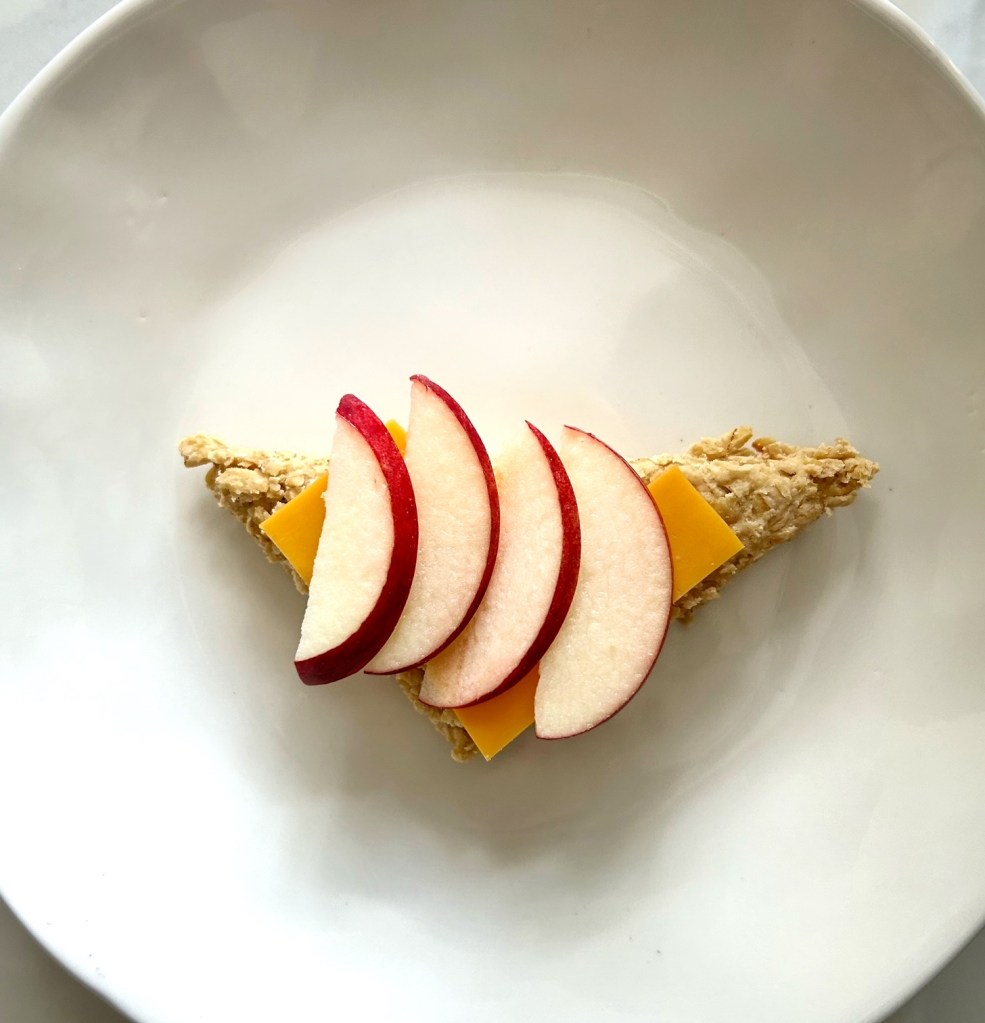
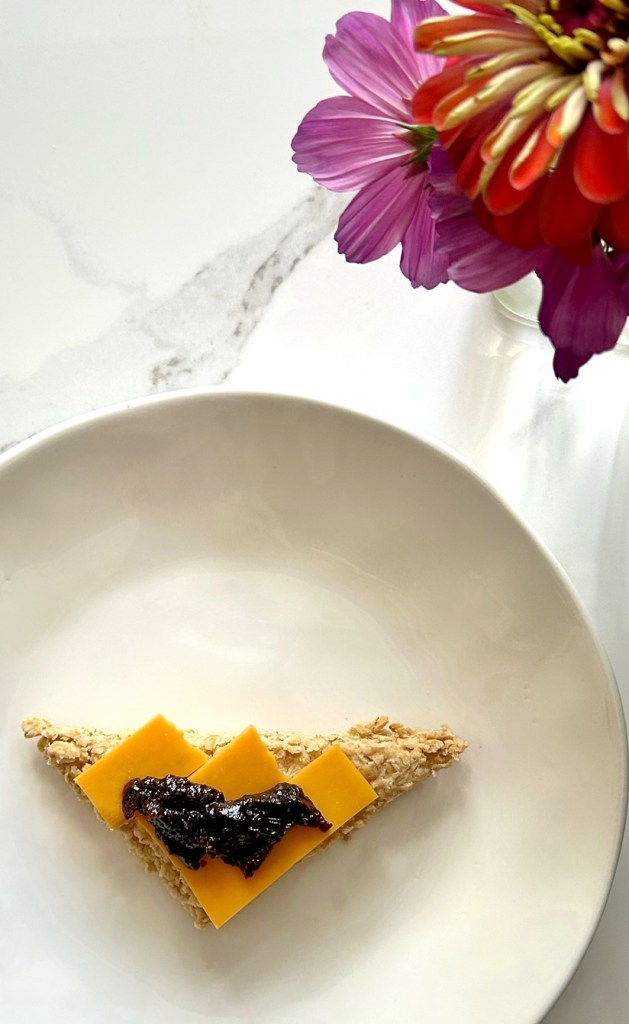
These were lovely, crispy, tasty, hearty crackers. I used gluten-free flour, and used gluten-free old fashioned rolled oats, which I blitzed in the food processor to make them finer. They are quite nice as triangles, and I topped one with cheese and apples, and one with cheese and fig butter, and they were a fantastic mid-afternoon snack. They would also be great for breakfast topped with a nut butter and banana, or just plain jam.
“….
Cakes and tea for breakfast,
Pork and duff for dinner,
Cakes and tea for supper,
When daddy comes home from swilin’.”
~Duncan, Norman. Dr. Grenfell’s Parish: The Deep Sea Fishermen. New York: Fleming H. Revell Company, 1905.
 the prog basket