THE ORIGINAL ‘RECEIPT’
SHORT BREAD:
A pound of lard; a pound of butter; a pound of brown sugar; four pounds of flour, and a teaspoonful of salt.
~Matthew Morton Calder’s recipe, passed down verbally to Grace Cameron Calder – late 1800’s.
THE UPDATED RECIPE
- 4 lb. flour
- 1 lb. brown sugar
- 1 tsp. salt
- 1 lb. lard (chilled)
- 1 lb. butter (chilled).
Weigh and sift the flour.
In a very large mixing bowl, combine the flour, brown sugar and salt; using a rotating motion, rub the dry ingredients between the palms of the hands, and continue this action until there are no grainy lumps of sugar, and the texture is completely smooth.
Next, work the chilled lard and butter into the dry ingredients: cut the shortening into finger-sized pieces, and then, using the hands, crumble the pieces into the dry ingredients. Continue to rub the mixture between the fingers until all the grease is absorbed, and there are no lumps (the texture will be crumbly).
When perfectly well mixed (it takes quite a long time!) clump the dough together, using the hands, to form it into balls. (If desired, at this point the dough may be chilled for several hours.)
Heat the oven to 275F.
To roll, take a ball of dough, and place it between 2 pieces of waxed paper; roll gently with a rolling-pin to ⅝-inch in thickness.
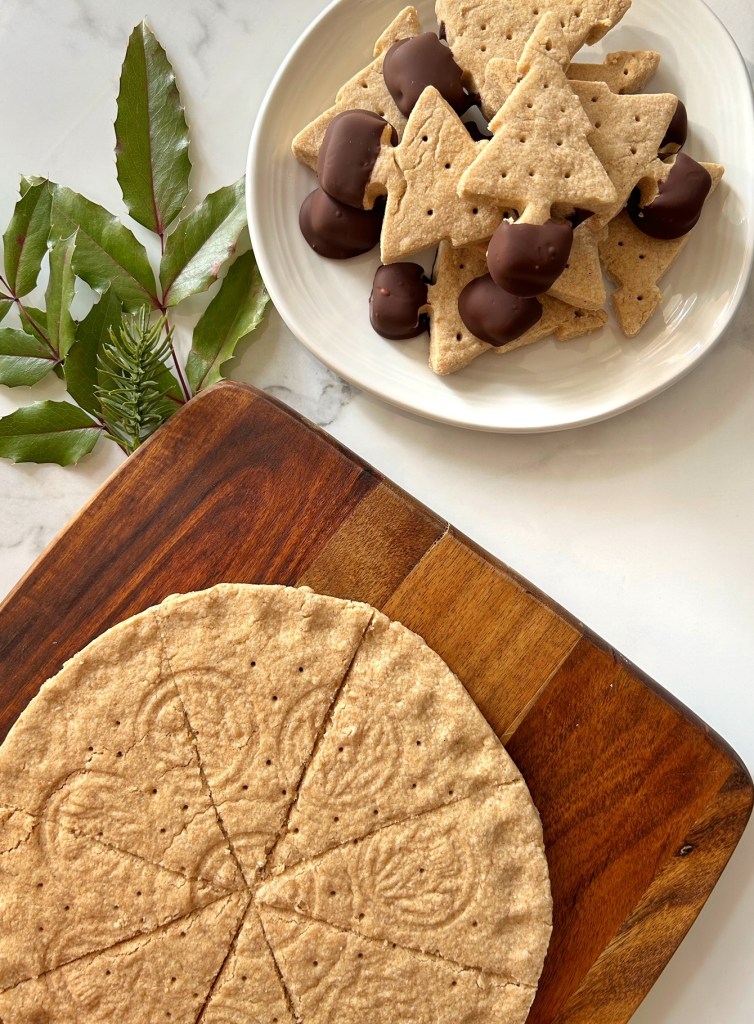
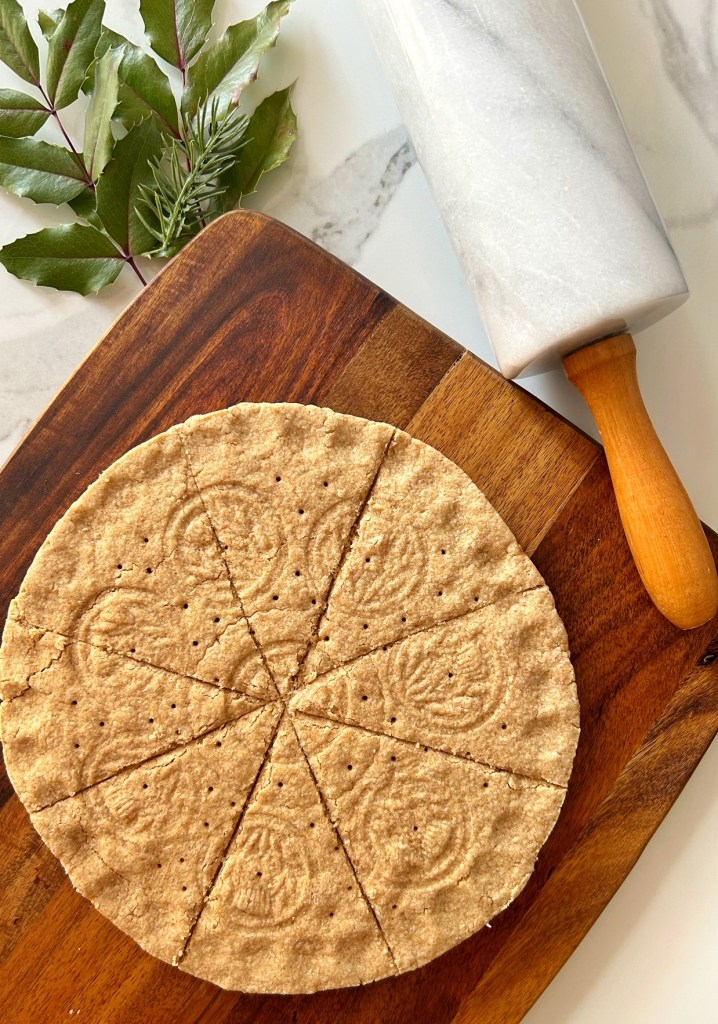
Using a 7-inch diameter plate as a guide, cut out a cake; crimp the edges with the fingers, and randomly pierce the cake with a sharp-tined fork.
Transfer the cake carefully onto a baking sheet that has been covered with parchment paper.
Bake at 275F for approximately one hour, or until golden.
Yield: about eight 7-inch diameter cakes.
When completely cooled, store the cakes in air-tight containers, in a cool place for about a week before using, to allow the short bread to ripen and mellow.
Scotch Short Bread is traditionally broken into pieces to serve.
Note: this recipe may effectively be halved or quartered, and individual cookies can be cut from the dough, instead of the large cakes (but these will take less time to bake).
This is a special treat during the holiday season, and is ideal for gift giving.

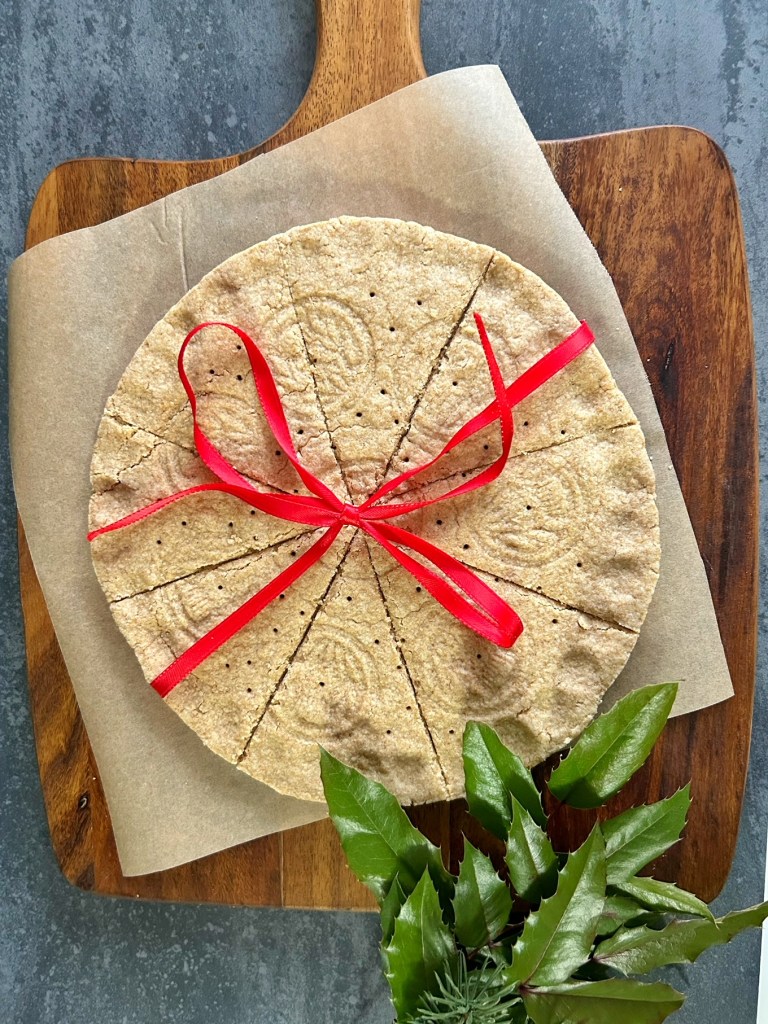
A note from Margie: I first learned how to make this short bread from my mother’s cousin Gracie (Aunt Matt’s daughter), when I was a small child. Early in December, as an annual event, I would ‘help’ to make a batch of Short Bread for my mother’s birthday present. Gracie would weigh the ingredients on an old balance scale, and the dough was prepared in an enormous Victorian china wash-basin adorned with flowers. Later, the short bread was rolled, and cut into rounds – each decorated with thumb prints around the edge, and pricked over with a three-tined fork. Then, (to me, the greatest mystery of all) the cakes were baked in a wood-stove in Gracies wonderfully cosy kitchen. We followed no written recipe: Gracie had been taught to make this short bread by her mother, and knew the ingredients and method by heart. So I was taught, also. The rich aroma of baking Short Bread in that old stone farm-house is among my fondest memories of childhood.
Rich Short Bread.
….prickle it on the top, pinch it round nicely with your fingers, and strew sugar carraways on the top.
~Frazer, Mrs. The Practice of Cookery (3rd Edition). Edinburgh: Printed for Peter Hill; by J. Ruthven & Sons, 1800.
Scotch Cake or Short Bread –
Take a peck of Flour…. – add Carroway or any other seeds you like – …roll into Cakes of any size or shape – prick them with a Fork – bake on floured papers.
~Jarvis, Hannah. Handwritten receipt book (prior to mid-1840’s). University of Guelph Archives, John MacIntosh Duff Collection.
SCOTCH SHORT CAKE FOR NEW YEAR’S DAY.
… Shape into four oval cakes about one inch thick, and with the sides of forefinger and thumb press into a rope effect all around the edge. Place on paper in a large pan and prick each cake clear through with a fork all around the top inside the fancy edge.
~The American Cook Book: One Thousand Selected Recipes. New York: William Randolph Hearst, 1901.
SCOTCH SHORT-BREAD.
2 lbs. flour
1 lb. best butter
½ lb. powdered sugar.
….roll into a sheet half an inch thick, and cut in shapes with a cake cutter. Bake upon buttered paper in a shallow tin until crisp and of a delicate yellowish brown.
~Harland, Marion. Common Sense In The Household: A Manual of Practical Housewifery. Toronto: G. M. Rose & Sons, 1884.
VERY OLD SCOTCH BREAD (Good). – 2 pounds flour, ½ pound lard, ½ pound butter, ½ pound sugar.
~Compiled by The Woman’s Department Canadian Farm. Canadian Farm Cook Book. Toronto: Canadian Farm, 1911.
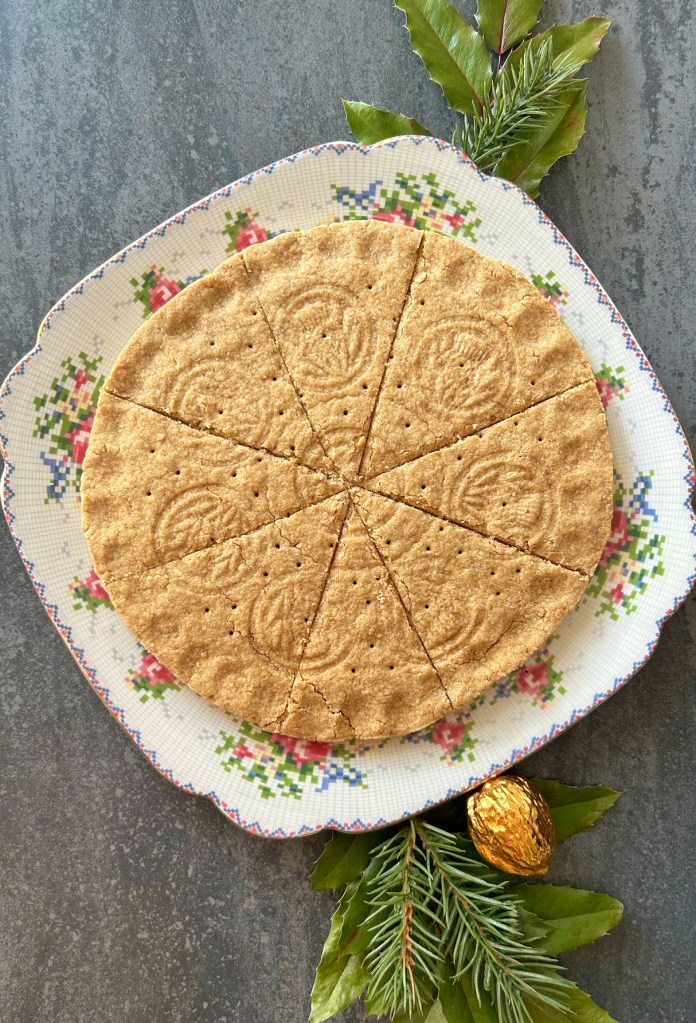
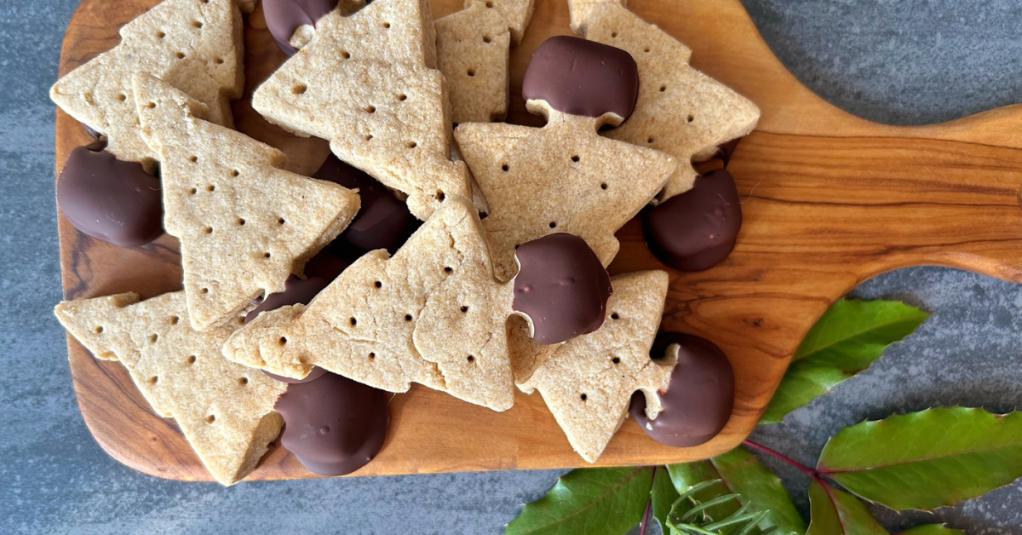
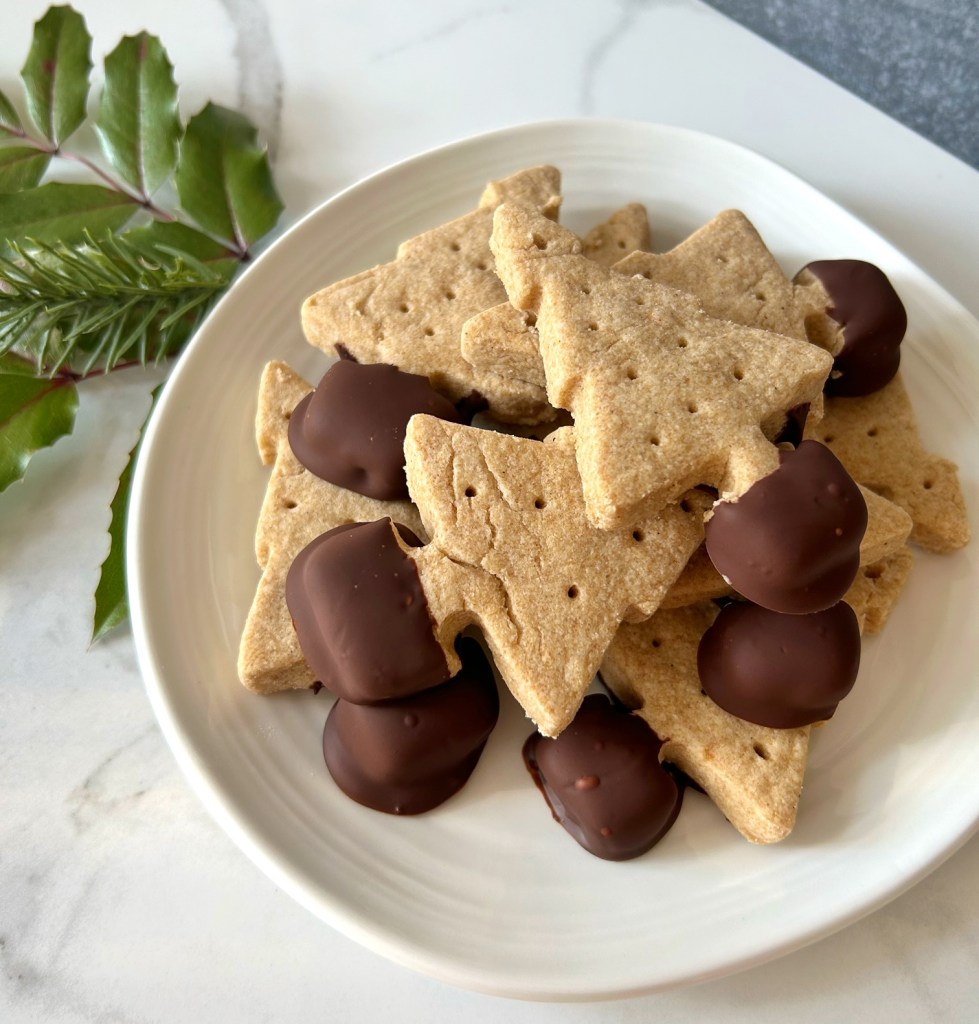
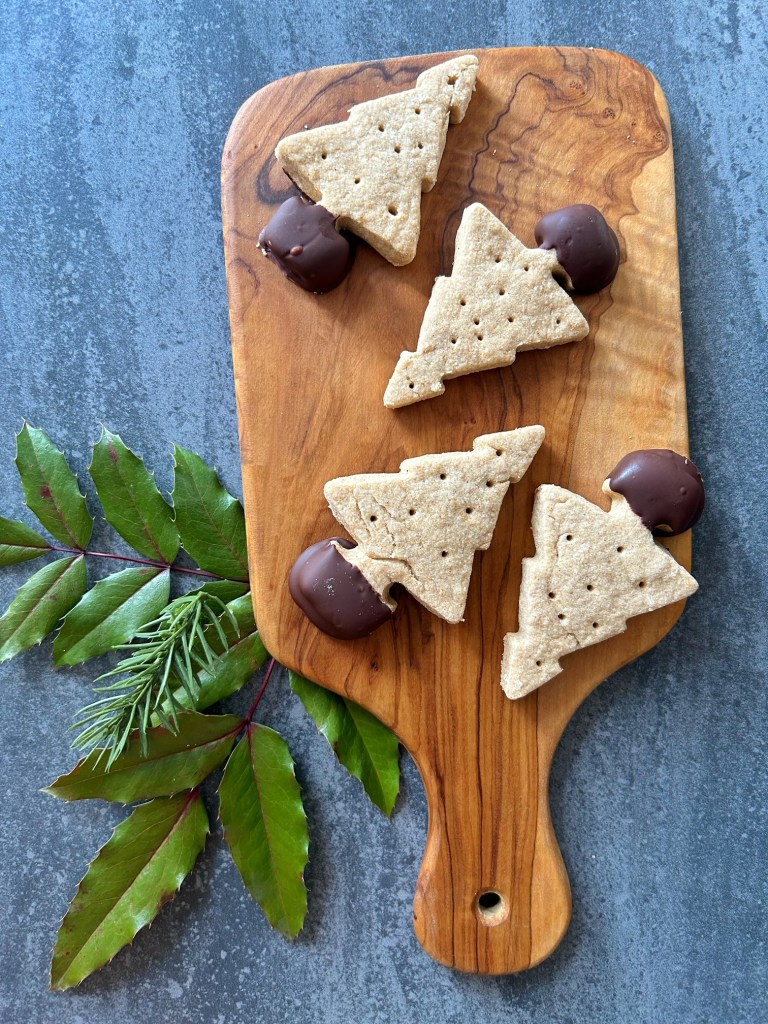
A note from Patricia: I, too, remember Gracie’s shortbread. Many a Christmas, our family would receive one of these rounds of shortbread that had been tied with a bow, and was lovingly placed in a square box. It was always delicious, and we would enjoy pieces of it after Christmas dinner along with dessert. This was my first attempt at shortbread, so I quartered the recipe just in case – with such a large quantity, and my lack of skill, I was worried that I’d make a mess of things and then it would be a waste of a large quantity of ingredients. I used 1:1 gluten-free baking flour in place of the all-purpose flour, and used a scotch thistle cookie stamp that I found among my aunt’s antique cookie cutters to decorate the top of the shortbread along with my thumb prints. I made one round of shortbread, and then cut out some trees with the remaining dough and dipped the bottoms in melted dark chocolate. As for the flavour? Let me tell you…..this shortbread was just as good as I remembered. What a lovely and heart-warming (not to mention easy!) holiday tradition, to make pretty rounds of shortbread as gifts.
 the prog basket
2 responses to “Aunt Matt’s Short Bread – late 1800’s”
Loved reading this, what a lovely memory to revisit as you baked. I also love old times recipes. Thank you for sharing. ♥️
LikeLiked by 1 person
while I appreciate this recipe (was also my grandmother’s) would it be possible to use a stand mixer in place of the rub of dry ingredients? – thank you
LikeLike