
THE ORIGINAL ‘RECEIPT’
LEMON CAKE.
One cup butter, three cups sugar, four cups flour, one cup milk, 5 eggs, one teaspoonful soda, juice and rind of one lemon.
~Warren, Jane. The Economical Cook Book. New York: Hurst and Company, 1890.
THE UPDATED RECIPE
- 1 c. butter
- 3 c. granulated sugar
- ½ tsp. salt
- 5 eggs, separated
- 4 c. sifted all-purpose flour
- 1 c. milk
- 1 tsp. baking soda
- juice and grated zest of 1 lemon.
Grease 4 round 8 1/2 -inch diameter cake pans with butter; line the bottom of each pan with a circle of oven-proof baking paper, and butter these papers. (A note from Patricia: Alternatively butter and lightly flour two 6-cavity mini-bundt tins – I used this)
Preheat oven to 350F.
In a large mixing bowl, cream together the butter, sugar and salt, with a wooden spoon, until light and fluffy.
Separate the eggs, and beat the yolks with a whisk until smooth and lemon coloured.
Add the beaten yolks to the creamed mixture, and beat in thoroughly.
Add the grated lemon zest, and blend it into the mixture.
Sift the flour and measure it.
Alternately add portions of the milk and sifted flour to the batter mixture, beginning and ending with the milk; beat well with a wooden spoon, after each addition.
Squeeze and strain the lemon juice.
In a separate mixing bowl, beat the egg whites with a whisk until they form stiff peaks.
Add the baking soda to the lemon juice, and quickly add this frothy mixture to the batter; beat in thoroughly.
Lastly, add the beaten egg whites to the batter, and blend in thoroughly to form a smooth batter.
Divide the batter evenly among the four prepared pans (or the cavities of the mini bundt pans), and smooth the surface of each with a broad-bladed knife.
Bake in a preheated oven at 350F for approximately 25 minutes, or until faintly golden, and when a cake tester inserted into the centre of the cakes comes out clean.
When baked, remove from the oven, and allow to cool slightly; loosen the edges with a sharp knife, then gently remove the layers from the pans (or remove the mini bundt cakes), and cool completely on racks.
If making a layer cake, these layers may be put together with Lemon Butter, or some other filling, and iced with frosting as desired. If making mini bundt cakes, feel free to drizzle with a simple icing.
This Lemon Cake is rich, delicate and delicious; it is perfect for a large crowd.
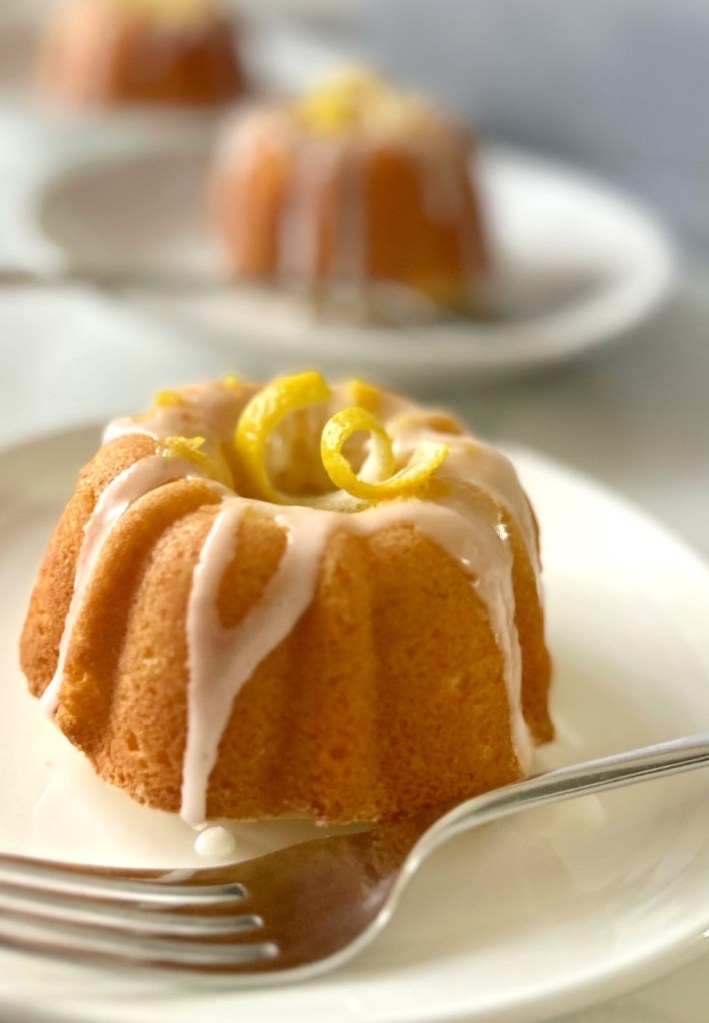
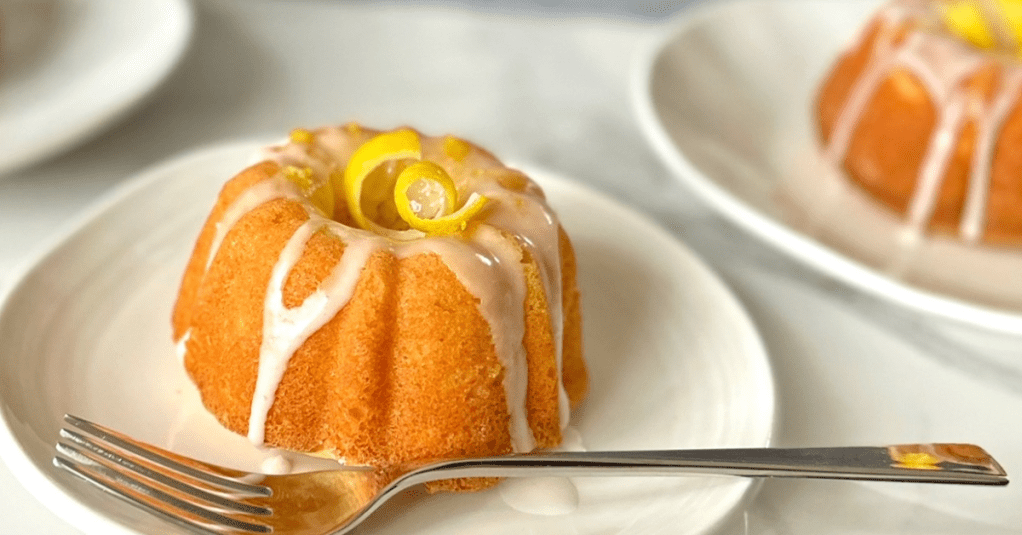
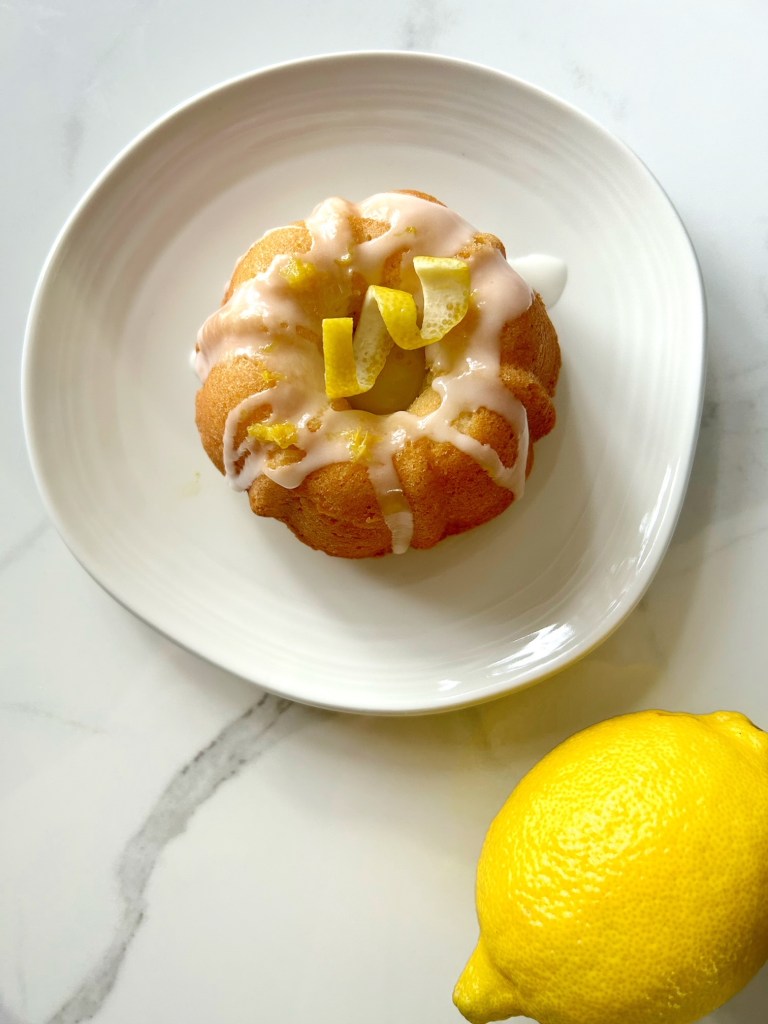
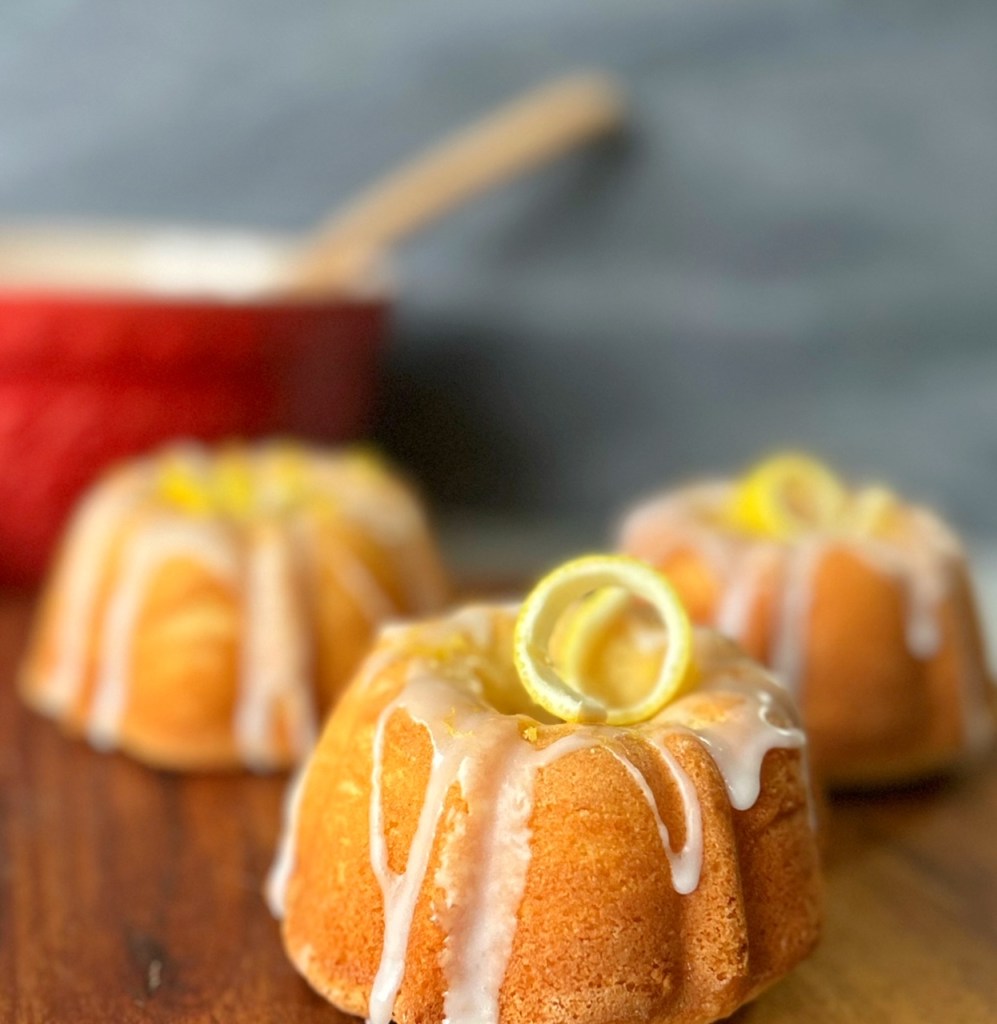
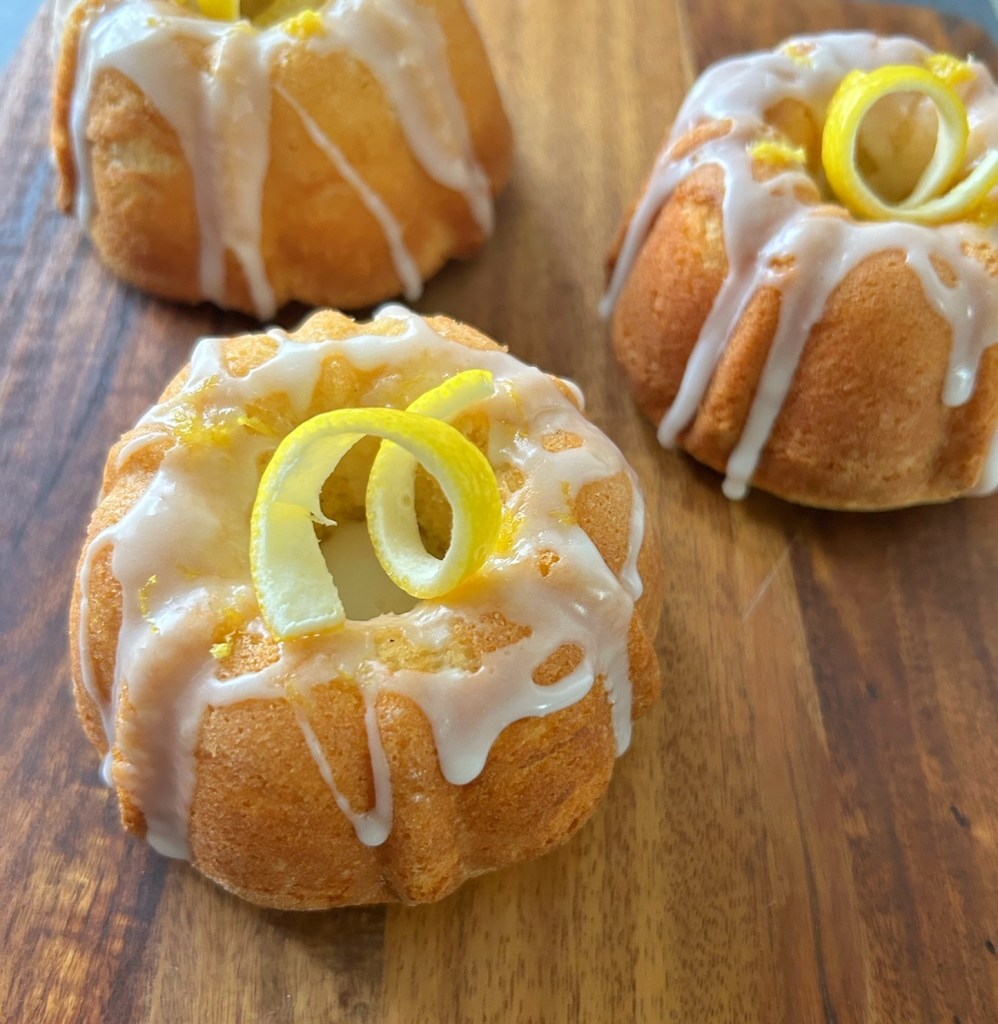
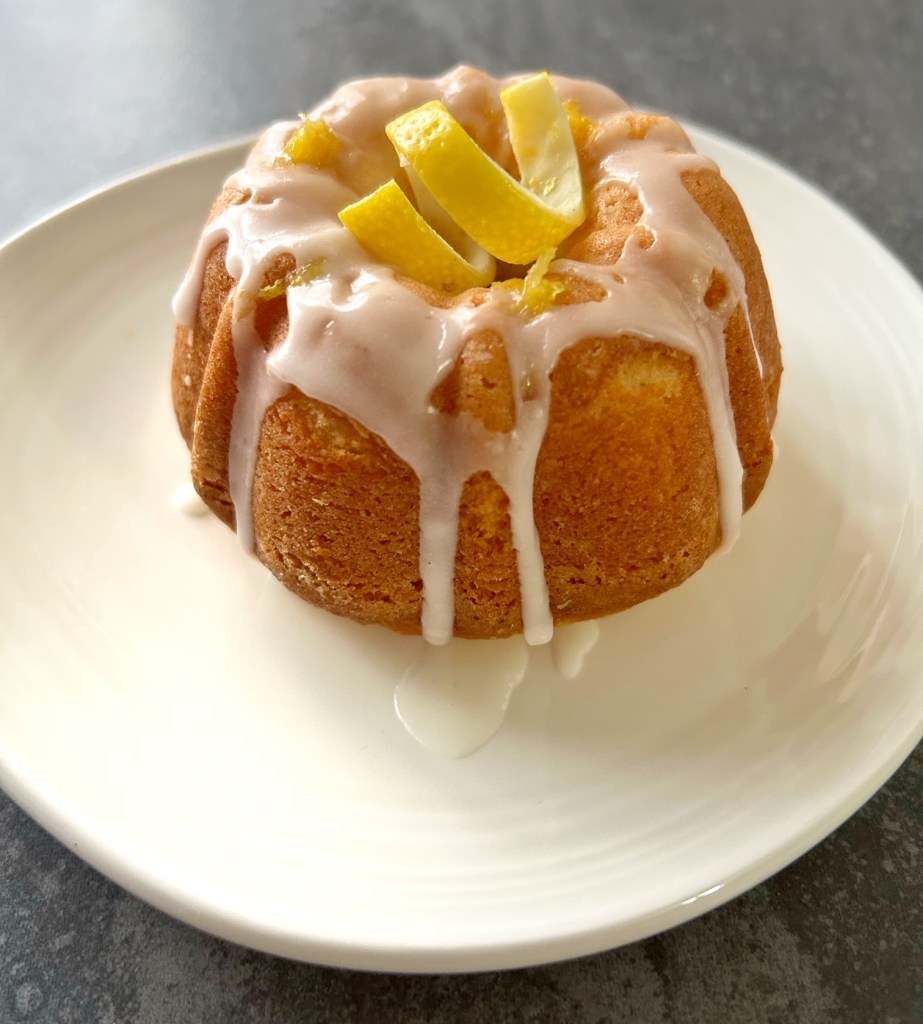
A note from Patricia: I’m continuing to celebrate Citrus Month with this Lemon Cake recipe. I wasn’t preparing this for a crowd, so I made the (barely) healthy decision to halve this recipe, and I also thought it was time again to use my baby bundt tins (I used this one), as they make such adorable little cakes. With half of the recipe, I was able to fill up all 6 of the cavities. I used 1:1 gluten-free baking flour with good success, and also substituted buttermilk for the milk in the recipe as it’s all I had on hand and I needed to use it up. This cake was really lovely – it was bursting with bright lemon flavour and was light and fluffy. Lemon desserts are fantastic for any occasion, and making a cake from scratch always tastes so much better, so this recipe is a great one to have in your back pocket. I drizzled a little lemony icing on top of each bundt that I made from icing sugar, oat milk, lemon juice and a pinch of salt, and then topped each with a curl of lemon rind to make them pretty. In all, this cake recipe is a tangy ray of sunshine, and I’ll definitely make this again.
….in the composition of cakes, …. the flour should be dry and sifted, loaf sugar rolled and sifted, butter worked with the hand to a cream, eggs well and separately beaten, that is, the yelks and whites apart.
~A Lady. The New London Cookery, and Complete Domestic Guide (“nightcaps”). London: G. Virtue, 1827.
After all the articles are put into the pan, they should be thoroughly and long beaten, as the lightness of the cake depends much on their being well incorporated.
~Mrs. Rundell, Domestic Cookery For The Use of Private Families. London: Jones & Co., 1845.
All cakes bake nicer if the pans used are lined with buttered paper.
~Warren, Jane. The Economical Cook Book. New York: Hurst and Company, 1890.
Try when the cake is done, by inserting a splinter or straw; if it comes out clean, the cake is done.
~Beecher, Catherine E. Housekeeper and Healthkeeper. New York: Harper and Brothers, 1873.
 the prog basket
2 responses to “Lemon Cake – 1890”
I like the mini bundt cake shape. Looks great!
LikeLike
Thank you, Chef!
LikeLike