THE ORIGINAL ‘RECEIPT’
TOMATO SOUP
1 tin tomatoes, 1 quart stock, 1 gill milk or cream, 1 ounce butter, 1 ounce flour, pepper and salt. Boil together the stock and tomatoes 15 minutes, then rub them through a sieve, melt the butter in a sauce-pan, stir in flour and strained stock, boil 2 minutes, allow the boil to go off, then add cream, and do not allow it to boil again or the cream will curdle.
~Magic Cook Book and Housekeepers Guide – 8th Edition. Toronto, Winnipeg, Montreal: E.W. Gillett Co. Ltd., 1915.
THE UPDATED RECIPE
- 1 19oz. can of stewed tomatoes
- 4 c. chicken stock
- 1 oz. butter
- 1 oz. flour
- ¼ tsp. salt
- dash of pepper
- ½ c. milk
Combine the tomatoes and the chicken stock in a large saucepan, and simmer over medium heat for 15 minutes. Force this mixture through a colander or carefully blitz with an immersion blender.
In a large saucepan, melt the butter over low heat, and then work in the flour, salt and pepper; blend until smooth.
Add the pureed tomato and stock mixture, and boil over medium heat for two minutes, stirring frequently.
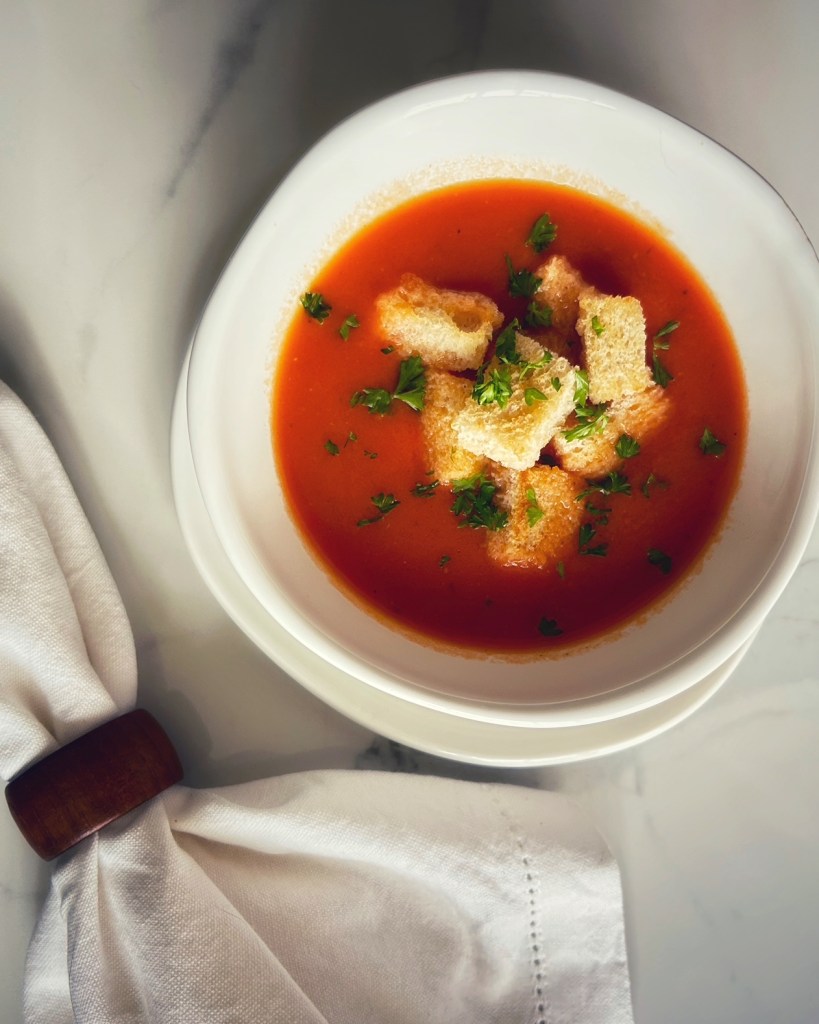
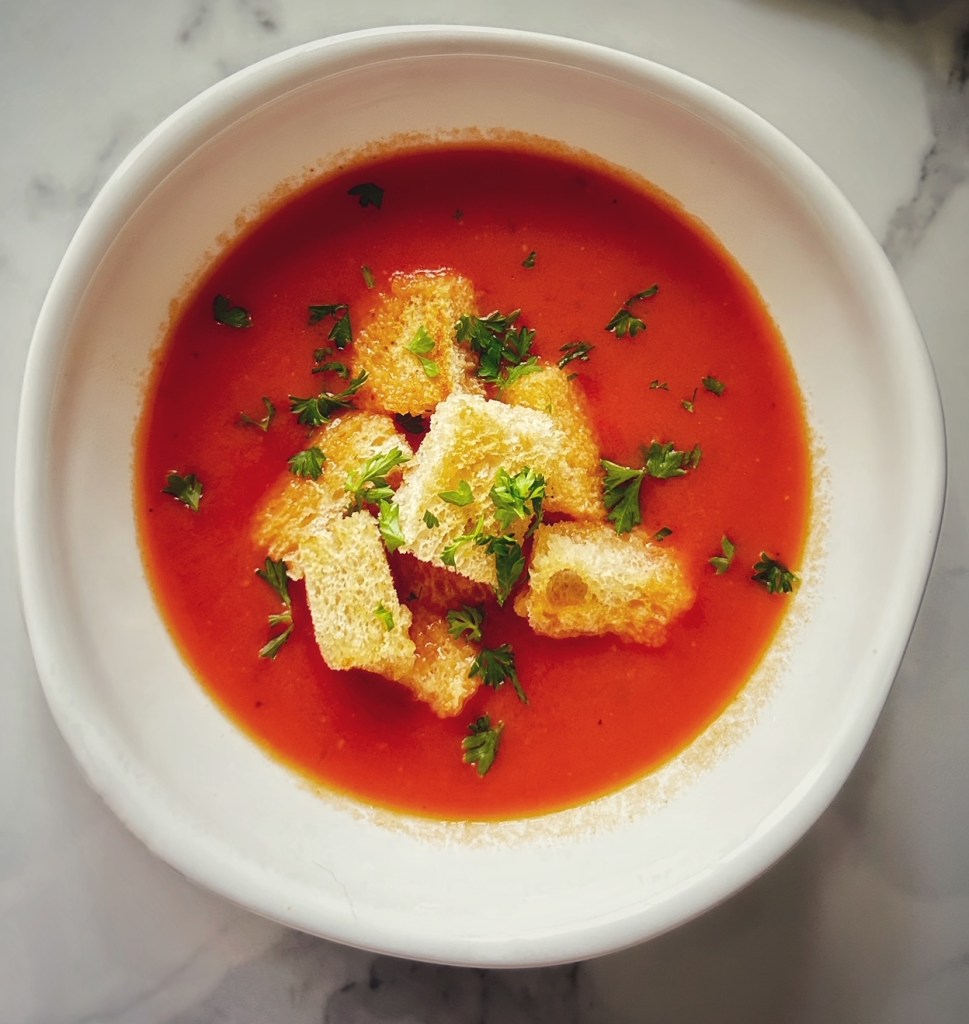
Reduce the heat, and allow the mixture to stop boiling; then add the milk, and continue to heat, just until it steams, stirring continually. Do not let it boil again after the milk has been added. Serve the soup when it is thoroughly heated. It’s lovely with Fried Bread for Soup!
Yield: 4 to 6 servings
A note from Margie: By the early years of the twentieth century, ‘convenience’ foods, such as canned tomatoes, were available to Canadian households; this wholesome yet simple soup is tasty and comforting.
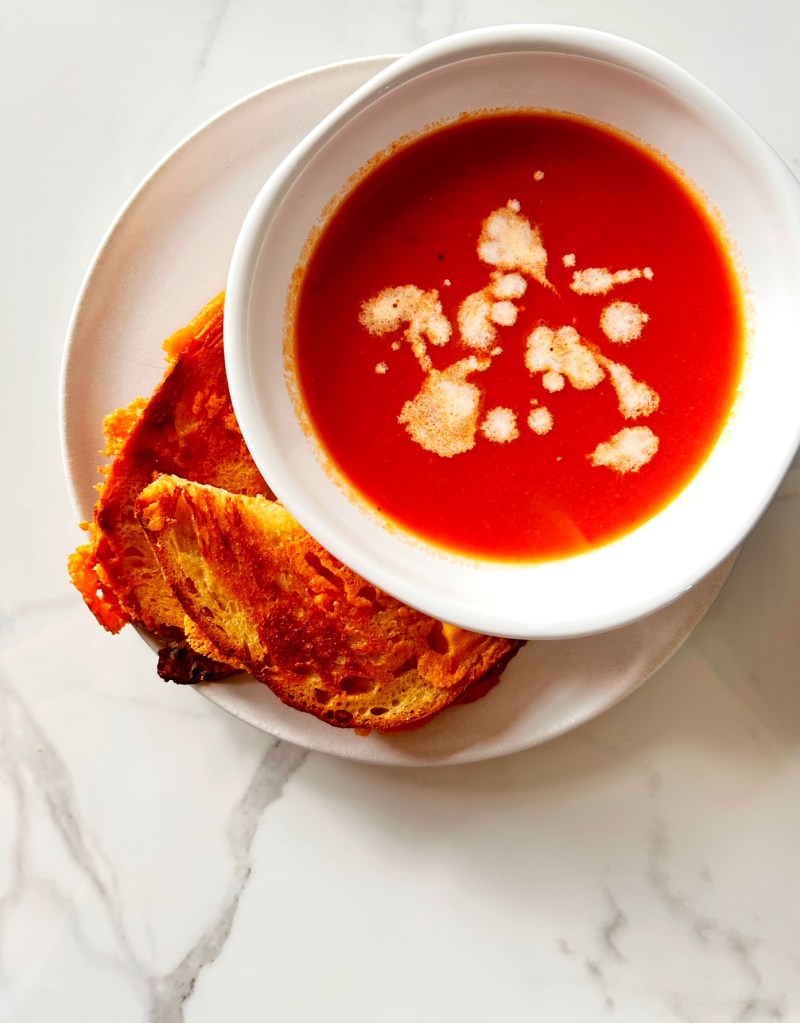
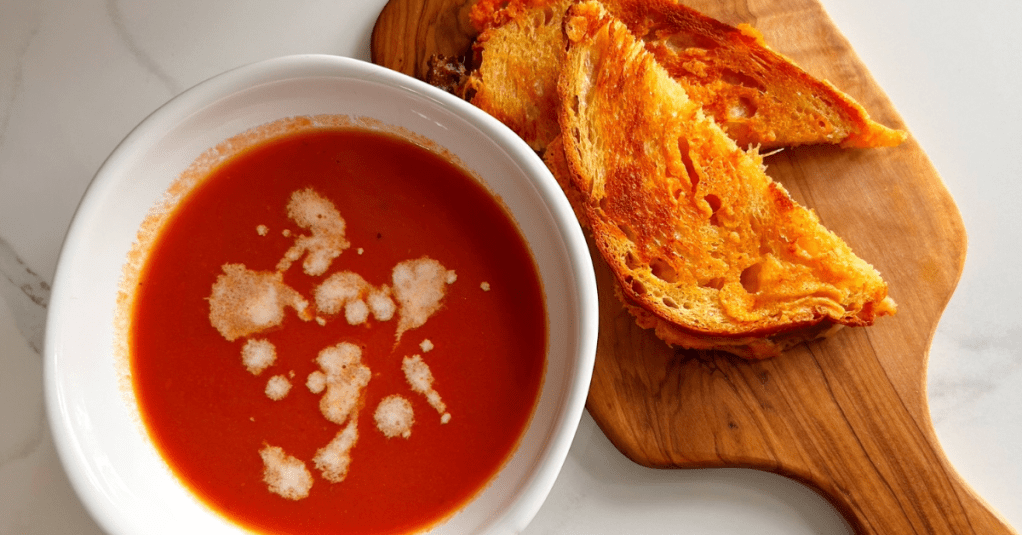
A note from Patricia: As far as tomato soups go, this was one of the best I’ve ever had. It’s rich and creamy, and the tomato flavour is so vibrant – it’s comfort in a bowl. Be sure to make some of the Fried Bread for Soup… it’s worth the extra step and gives a lovely buttery crunch to the soup. Or go ahead and serve it with a drizzle of cream and a grilled cheese sandwich – classic!
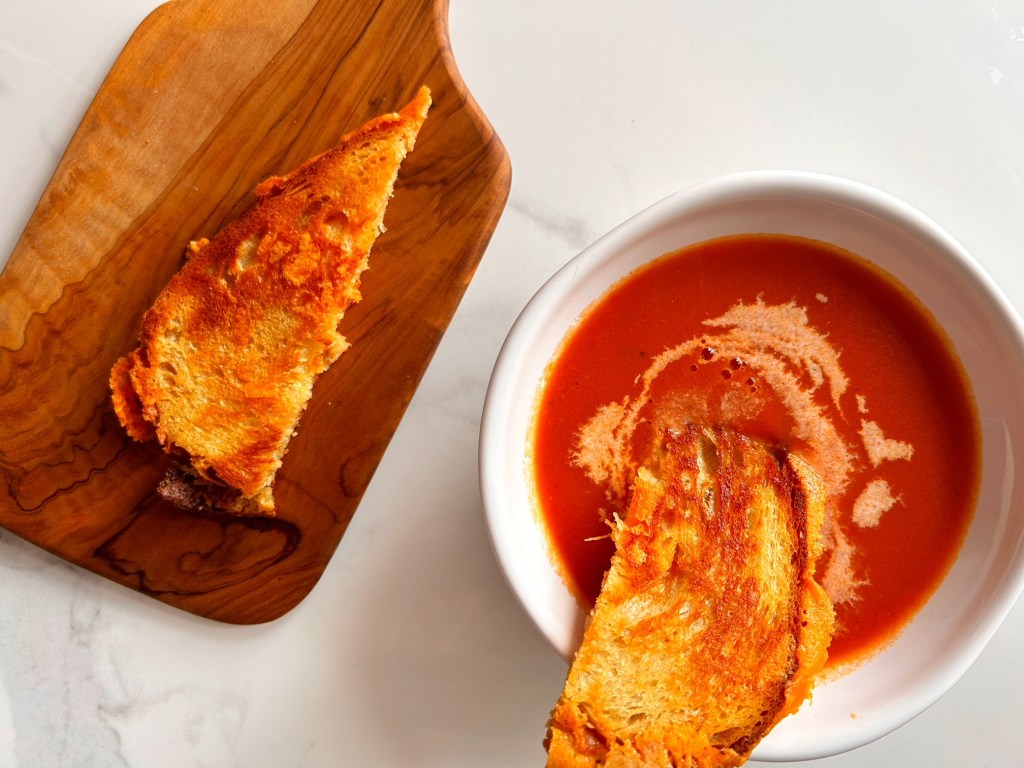
To take soup pushing the spoon from rather than toward yourself; to touch the napkin as little as possible; to accept or decline what is offered instantly and quietly; these and other trifles characterize the well-bred diner out.
~Neil, E. The Every-Day Cook-Book and Encyclopedia of Practical Recipes for Family Use. Chicago & New York: M.A. Donohue & Company, 1892.